
Articles / Guides
Before You Arrive: Questions Every Camp Songleader Should Ask
Barak Malichi
A practical pre-camp checklist for instruments, sound gear, repertoire, staff, schedule, Shabbat, activities, and band programs.
Ask early
A lot of songleading stress can be solved before you ever get to camp.
The goal is not to sound demanding. The goal is to arrive prepared, understand the camp's traditions, and avoid discovering five minutes before song session that there is no cable, no capo, no working mic, and nobody knows where the camp songbook is.
Here are the questions I would ask before arrival.
Instruments
Start with the basic musical tools.
Ask:
- Is there a guitar or keyboard at camp?
- If there is a guitar, does it have a pickup?
- Can the guitar be plugged into a sound system?
- Can a strap be attached to it?
- Can someone send a photo of the guitar, keyboard, and any available instruments?
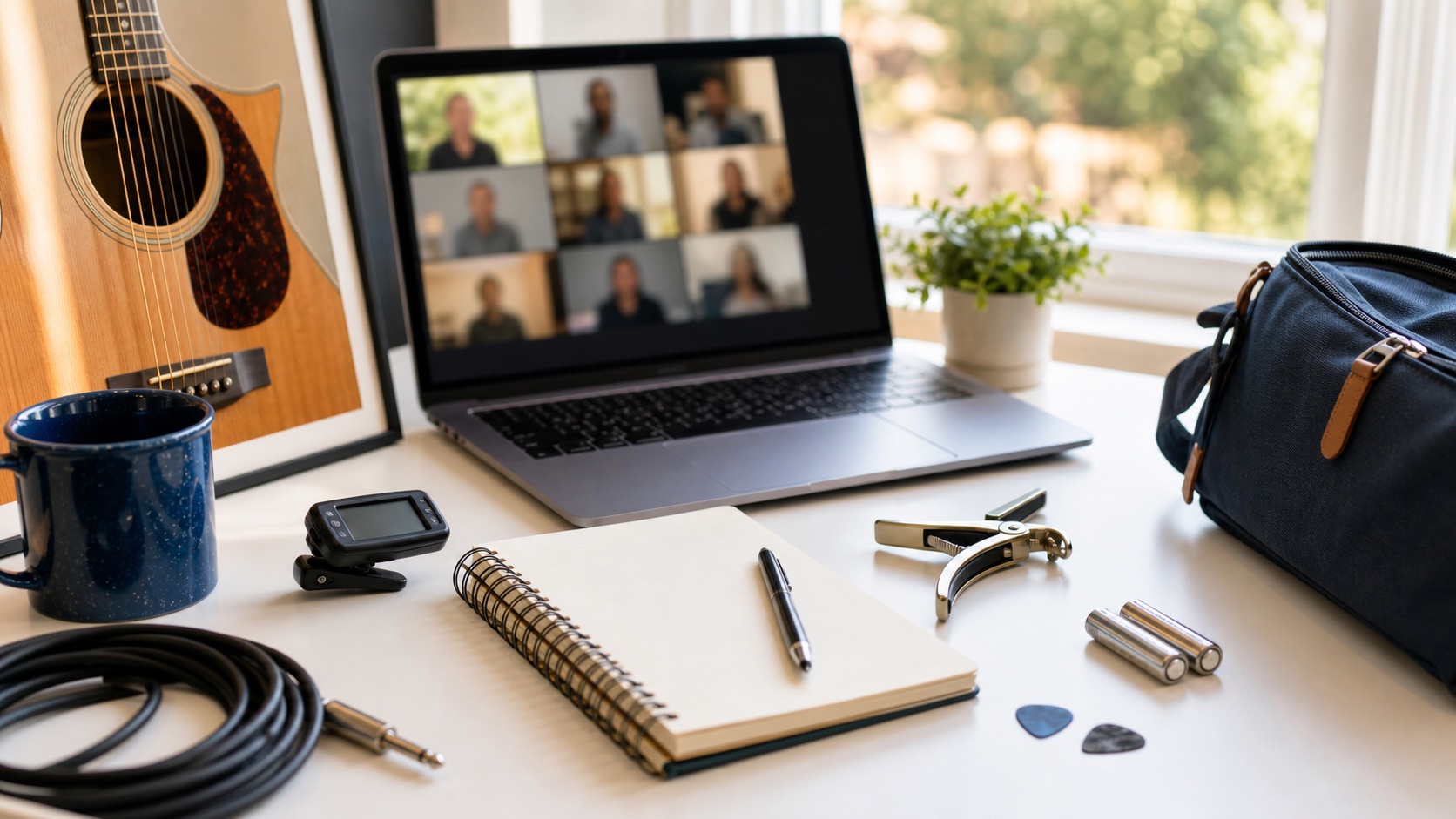
Even if camp says they have a guitar, bring your own small essentials if you can: capo, clip-on tuner, picks, spare strings, and extra batteries.
Sound equipment
This is the part that can make or break a session.
Ask:
- Is there a sound system?
- What can connect to it?
- Are there instrument cables and mic cables?
- Is there a microphone?
- Is there a mic stand?
- Are there spare batteries for guitars, tuners, microphones, or wireless gear?
- Who is responsible for setting up sound?
- Is there a staff member who knows the system, or is the songleader expected to handle it?
That last question is huge. Leading songs and running sound at the same time are different jobs. Sometimes you will need to do both, but it is better to know that before camp starts.
Songs and traditions
Every camp has its own musical language.
Ask:
- Is there a playlist of camp songs?
- Is there a folder of recordings?
- Are there videos from past summers?
- Is there a chord book or songbook?
- Who is the best person to ask about camp traditions?
- Are there specific songs for Shabbat, Havdalah, Mifkad, meals, campfire, or closing circles?
That person does not have to be a musician. Sometimes the best tradition-holder is a unit head, longtime counselor, Israeli staff member, or camp director who simply knows what songs matter to the community.
Staff
Find out who is with you.
Ask:
- Is there another music staff member?
- What is their experience?
- Are they new to camp?
- What instrument do they play?
- Are there staff members who can help lead singing from inside the group?
If you have another musician, you can divide responsibilities. If you do not, you can ask for support from staff anchors who know camp songs and can help campers join.
Schedule
The schedule tells you what kind of preparation you really need.
Ask:
- What does a normal day look like for me?
- Is there time for rehearsals?
- What does the weekend look like?
- Are there services where I am expected to play or sing?
- What happens on Friday night, Saturday morning, and Havdalah?
- Are there all-camp events or special ceremonies?
- Are music activities electives, required programs, or group activities?
- Do campers arrive as a regular cabin or unit group, or as individual musicians choosing the activity?
That changes everything. A required cabin activity needs a different plan than an elective full of kids who chose music.
Band and performance programs
If camp expects a band program, ask early.
Ask:
- What instruments are available?
- Are there drums, keyboard, guitar amps, bass, and microphones?
- Are there videos from previous years?
- Is the goal a casual jam, camper band, performance, talent show, or full camp event?
- Who helps with setup and supervision?
A band program needs time, gear, and structure. It cannot be built only from enthusiasm.
The bigger point
The best songleaders are flexible, but flexibility is easier when you know what you are walking into.
Ask early. Get photos. Get recordings. Get names. Bring small essentials. Learn the traditions before changing them.
Then when you arrive, you can spend less time chasing cables and more time doing the real work: helping camp sing.